[06:45 - 15:00]
After making sure that integrations and API were clear terms, Ben went on to explain why some integrations take more development effort than others and when it is important to differentiate between types.
"To make the most of the integration process, you’ll have to discern the type of integration needed for the best outcome. That means knowing the difference between what’s possible and the pros and cons of implementing any of the following solutions."
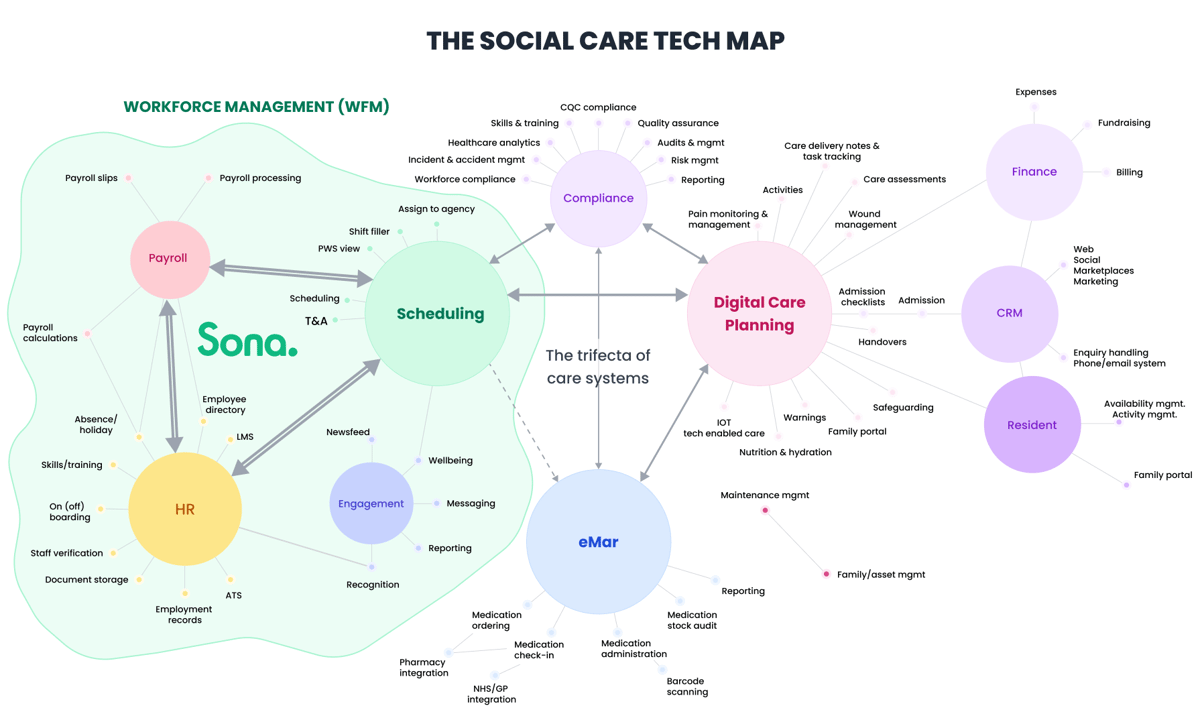
One-way or two-way integrations?
“One-way integrations are often the simplest integrations to build and so have the highest likelihood of success.”
“In a one-way integration, one system needs to transfer data to another system, but there is no requirement for that second system to pass updated data back to the first”
So, a typical example of a one-way integration might be an Applicant Tracking System to a HR system:
- The Applicant Tracking System manages all of the data while somebody is being hired.
- Once that person has been hired, you would then take that data and push or pull it into a HR system. The HR system has no need to push data back into that applicant tracking system.
- Once the data has been passed over, the Applicant Tracking System ceases to be the “source of truth” of that data.
- The HR System becomes the source of truth.
Two-way integrations are more complex, but they will mean two systems are “communicating” with each other, i.e. passing information back and forth.
So, the decision that has to be made is: How often does this need to happen? If the answer is "always", that is a real-time integration. If it's "occasionally," then you need a batch-update integration.
Real-time or batch-update integrations?
“The important thing when deciding between real-time and batch integrations is: 'Do you genuinely need the real time data? What is the benefit of the real time data versus the batch data?'
Because in quite a lot of situations where we might start off thinking that we absolutely need something, in real-time, which might be more complex and more expensive to build as an integration, in practice, all the same benefits can be realised with a batch integration, which might happen every hour or even every 15 minutes.”